SEE Lab에서는 어떤 연구를 하나요?
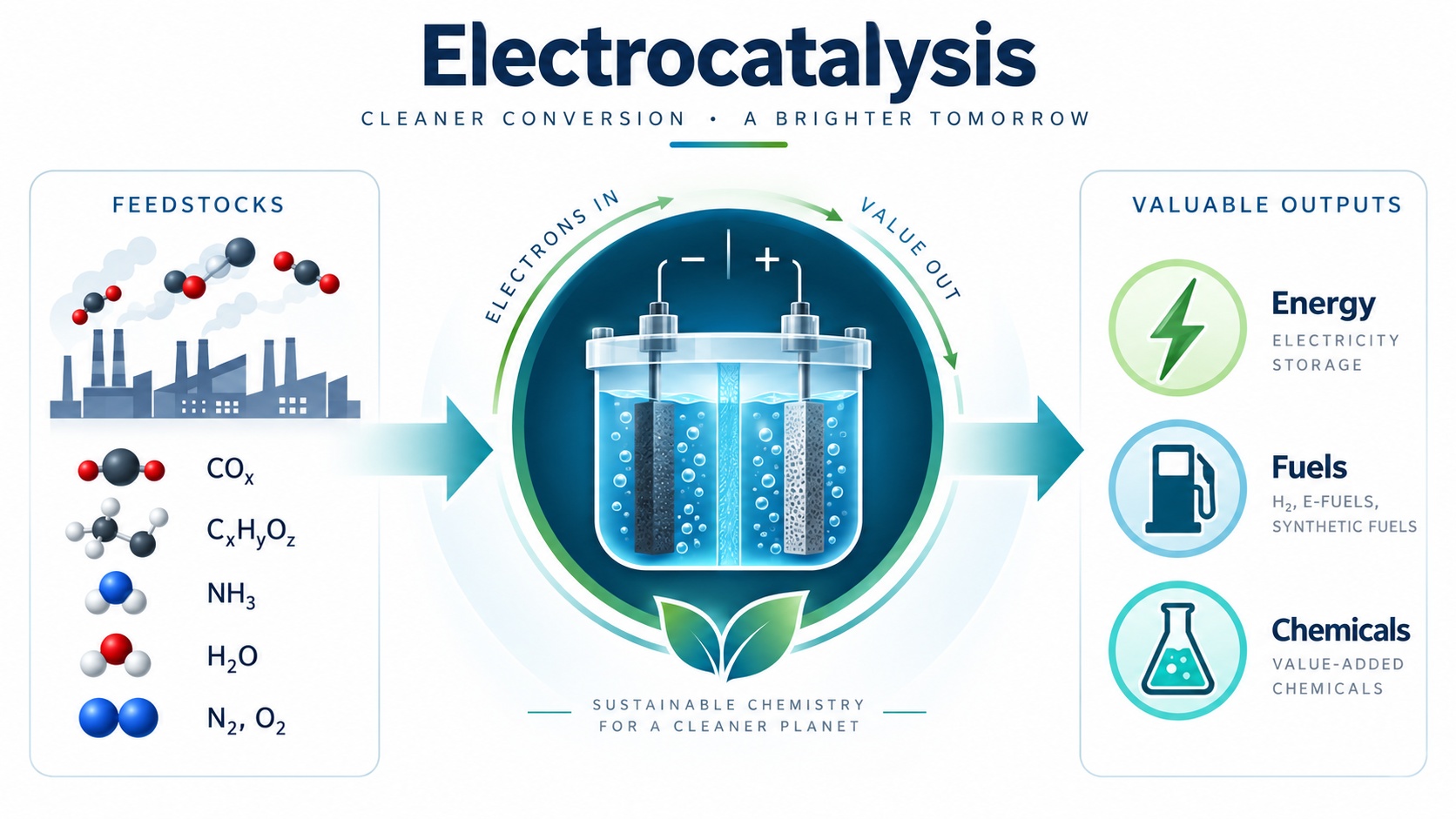
SEE Lab은 한마디로 “전기를 이용해 화학반응을 더 친환경적이고 효율적으로 만드는 방법”을 연구합니다.
물을 전기분해해 그린수소를 만들고, CO₂와 같은 원료를 전기화학 반응을 통해
유용한 연료와 화학물질로 바꾸는 공정을 연구합니다.
동시에 에너지가 전기와 화학에너지 사이에서 저장되고 변환되는 과정을 이해하고,
연료전지와 전해조 같은 실제 에너지 장치로 연결하는 데 관심을 두고 있습니다.
이런 반응이 잘 일어나려면 촉매가 매우 중요한데, 촉매는 반응 중에도 계속 변합니다.
그래서 SEE Lab에서는 Raman, XAS 등 operando / in-situ 분석을 이용해
“반응이 일어나는 바로 그 순간”의 촉매 표면을 직접 관찰하고,
왜 활성이 좋아지는지, 왜 성능이 떨어지는지, 어떻게 하면 더 오래 사용할 수 있는지를 이해합니다.
결국 전기화학 반응을 설계하고 → 실제 반응을 보고 → 원리를 이해하고 → 실제 장치로 연결하는 것이
SEE Lab 연구의 핵심입니다.
Green Hydrogen &
Sustainable Reactions
We design electrocatalytic reactions that use renewable electricity to produce hydrogen, fuels, and chemicals with improved activity, selectivity, and durability.
Electrocatalysts for hydrogen and oxygen evolution, including durable electrodes for high-current-density operation.
Electrochemical pathways toward C1 and multi-carbon products through catalyst and interface control.
Electrochemical conversion routes for fuels and chemicals beyond conventional thermochemical processes.
Operando Interfacial
Analysis
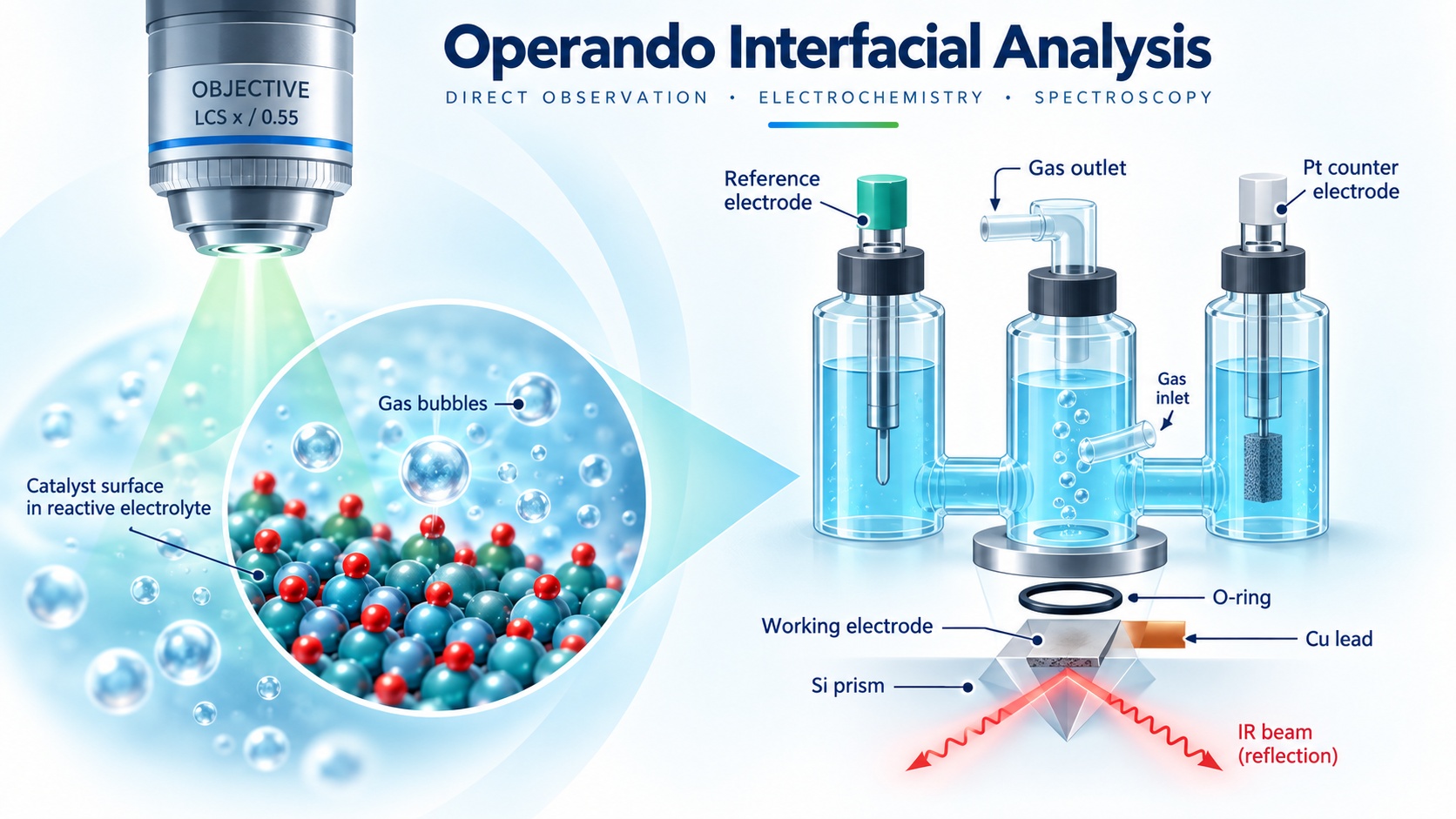
Electrochemical catalysts are dynamic under bias. We observe active interfaces in real time to identify reaction intermediates, surface reconstruction, and the origin of catalytic performance.
Direct monitoring of catalysts under realistic electrochemical conditions rather than only before and after reaction.
Raman, infrared, UV–Vis, and related in-situ approaches for tracking active species and interfacial structure.
Connecting spectral signatures with activity, selectivity, reconstruction, dissolution, and long-term stability.
Electrochemical
Systems
We translate catalyst-level understanding into practical electrochemical systems by integrating electrodes, cell architecture, transport, monitoring, and scale-up.
From catalyst layers and electrodes to cell architecture, operating conditions, and larger electrolysis formats.
Connecting material design with manufacturable electrode structures and device-level electrochemical performance.
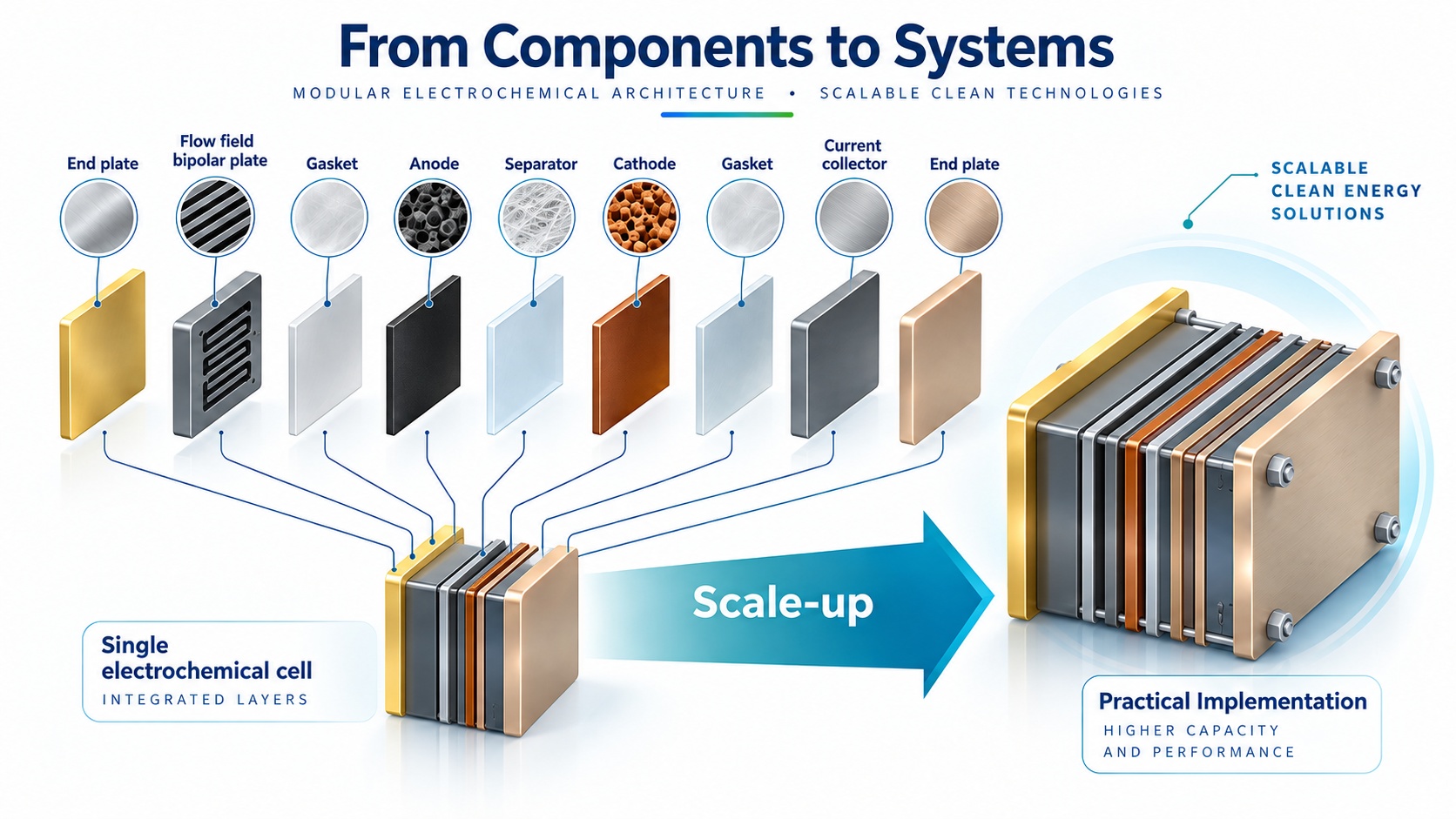
From fundamental insight to practical electrochemical engineering
Sustainable reactions and electrocatalysts.
Active interfaces under working conditions.
Mechanisms, active phases, and degradation.
Durable electrodes and electrochemical systems.